
Salon Website Design with Online Appointment Booking 2026
05 Nov, 2026
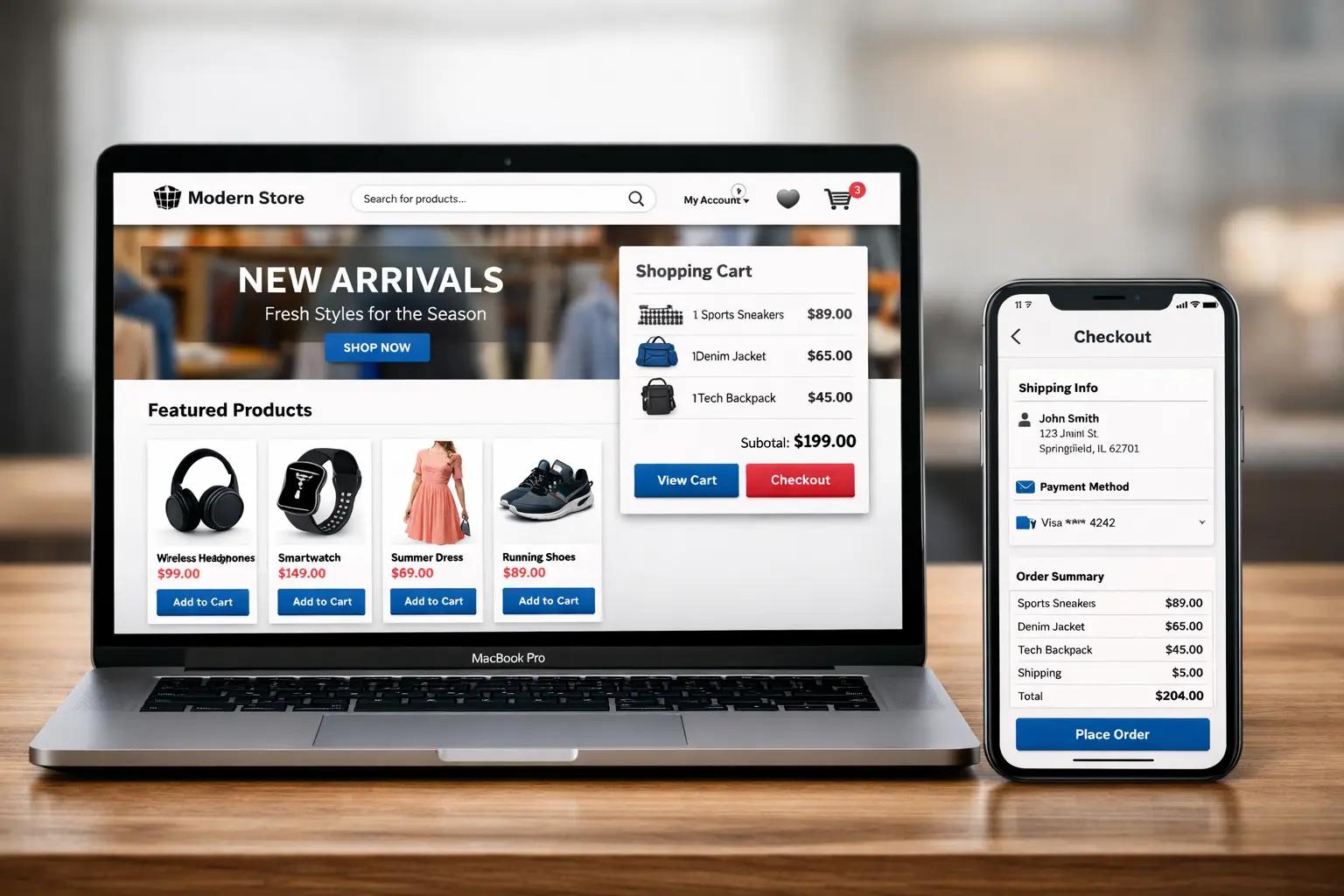
Selling products online is no longer limited to large brands and established retailers. Small businesses, manufacturers, wholesalers, startups and local retailers can now reach customers beyond their physical locations through e-commerce websites.
However, simply uploading product images and adding a shopping cart is not enough to build a successful online store. Customers expect a smooth shopping experience, secure payments, accurate product information, convenient delivery options and reliable customer support.
This is why investing in professional e-commerce website development in Nagpur can be an important step for businesses planning to expand their digital presence.
A well-developed e-commerce website allows customers to explore products, compare options, place orders and complete payments through a convenient online platform. It also gives business owners better control over product presentation, customer communication, inventory and sales operations.
Whether you are launching a new online business or moving an existing retail operation online, understanding the essential features of an e-commerce website can help you make better development decisions.
In this guide, we will explore the features, development considerations, SEO requirements and important factors businesses should understand before investing in an online store.
Traditional businesses often depend on physical stores, distributors or sales representatives to reach customers. An e-commerce website creates another sales channel that customers can access from different locations.
Here are some reasons businesses are investing in professional online store development.
A physical store generally serves customers within a particular geographical area. An e-commerce website can help businesses showcase products to customers across different cities and regions, depending on their delivery capabilities.
For example, a manufacturer based in Nagpur can use an online store to present its products to potential buyers in other parts of Maharashtra and India.
Customers do not always shop during regular business hours.
An online store allows visitors to explore product categories, check specifications, view prices and submit orders whenever convenient.
This provides greater flexibility for customers and creates additional opportunities for businesses.
An independent e-commerce website gives businesses greater control over their online shopping experience.
You can communicate your brand identity, present product information, manage customer enquiries and develop marketing campaigns without depending entirely on third-party marketplaces.
A properly configured e-commerce platform can simplify several business operations.
Depending on the selected features, businesses can manage product listings, inventory, orders, payment records, shipping information and customer accounts through a central dashboard.
This can reduce manual work and improve operational visibility.
A marketplace listing may place your products alongside numerous competing sellers.
With your own website, you can develop branded product pages, publish informative content and improve your visibility through search engine optimisation.
Over time, this can create an additional source of relevant website traffic and customer enquiries.
An online store should make shopping easy, secure and convenient. The following features are particularly important when planning an e-commerce website.
Your website is often the first interaction a customer has with your online brand.
A confusing layout, poor product presentation or difficult navigation can discourage visitors from purchasing.
A professional e-commerce website should include:
Clean and attractive homepage design.
Easy-to-understand product categories.
Responsive layouts for mobile, tablet and desktop.
Visible shopping cart and account options.
Clear product images and descriptions.
Easy-to-find contact and support information.
Mobile responsiveness is particularly important because customers frequently discover and purchase products using smartphones.
The complete shopping journey, from product discovery to payment confirmation, should work smoothly on smaller screens.
Customers should be able to find what they need without unnecessary effort.
Organise products into meaningful categories and subcategories. Add a search feature that helps visitors find products using names, brands or relevant terms.
For stores with larger catalogues, consider filters such as:
Price range.
Product category.
Brand.
Size and colour.
Availability.
Customer ratings, where applicable.
Better navigation helps customers discover relevant products and makes the shopping experience more efficient.
Product pages play an important role in purchasing decisions.
Customers cannot physically inspect products online, so your website needs to provide enough information to help them understand what they are buying.
A good product page should include:
High-quality product photographs.
Clear product names and descriptions.
Pricing and applicable offers.
Available sizes, colours or variations.
Technical specifications, where relevant.
Stock availability.
Shipping and return information.
Customer reviews, when available.
For businesses selling technical products, industrial equipment or specialised goods, detailed specifications and downloadable product documents can also be valuable.
A smooth and trustworthy payment experience is essential for online transactions.
Depending on your business requirements, your e-commerce website can support payment methods such as:
UPI.
Debit and credit cards.
Net banking.
Supported digital wallets.
Cash on delivery, where operationally suitable.
Choose a reputable payment gateway that supports your preferred payment methods and integrates with your e-commerce platform.
The checkout process should use HTTPS, follow the payment provider's security requirements and avoid unnecessary collection of sensitive payment information.
A complicated checkout process can discourage customers from completing their purchases.
Your shopping cart should clearly display selected products, quantities, prices, applicable charges and the total order amount.
The checkout process should request only the information necessary to process and deliver the order.
Useful features include guest checkout, saved addresses, order summaries, shipping selection and clear payment instructions.
Make sure customers can review their order before confirming payment.
Managing product availability becomes increasingly important as online sales grow.
An e-commerce website can include an inventory management system that helps businesses track stock levels, update product availability and manage incoming orders.
Depending on the platform, useful features may include:
Stock quantity management.
Low-stock notifications.
Order status updates.
Order cancellation management.
Invoice generation.
Shipping status tracking.
Product variation management.
For businesses managing multiple warehouses or physical stores, more advanced inventory integrations may be necessary.
Customers want to know when their orders will arrive and how much delivery will cost.
Your e-commerce website should clearly communicate shipping charges, delivery estimates, serviceable locations and applicable conditions.
Depending on your requirements, you can integrate supported logistics providers to simplify shipping label creation, tracking and order fulfilment.
For businesses operating from Nagpur and serving customers across India, shipping configuration should reflect actual delivery coverage and operational capabilities.
Customer accounts can make repeat purchases more convenient.
Useful account features include:
Registration and login.
Saved delivery addresses.
Previous order history.
Order tracking.
Wishlist functionality.
Profile management.
However, guest checkout should also be considered where appropriate, so first-time customers are not forced to create accounts before purchasing.
Customers need confidence that their information is handled responsibly.
Important security considerations include:
HTTPS and SSL configuration.
Secure administrator access.
Strong passwords and appropriate user permissions.
Regular software updates.
Database backups.
Secure payment gateway integration.
Protection against common website vulnerabilities.
Businesses should also provide appropriate privacy, shipping, cancellation, return and refund policies based on their operations and applicable legal requirements.
An e-commerce website should help business owners understand how their online store is performing.
Tools such as Google Analytics 4 and Google Search Console can provide useful insights into traffic, search visibility and customer behaviour.
You can also configure conversion tracking for important actions such as purchases, add-to-cart events and checkout completion.
These insights help identify popular products, customer acquisition channels and areas where the shopping experience may need improvement.
Choosing the right platform is an important part of e-commerce website development.
The ideal solution depends on your product catalogue, budget, technical requirements, expected traffic and future growth plans.
Here are three commonly considered options.
Shopify is a hosted e-commerce platform designed to help businesses launch and manage online stores.
It offers product management, checkout functionality, themes and an ecosystem of integrations.
It can be suitable for businesses looking for a managed platform with less responsibility for server infrastructure.
WooCommerce is an e-commerce solution built for WordPress.
It provides flexibility in website design, product management and integrations.
It can be suitable for businesses that want greater control over their website and content management, although hosting, updates, security and maintenance need appropriate attention.
Custom development may be appropriate for businesses with specialised requirements that cannot be efficiently addressed through standard platform features.
Examples include complex pricing structures, customised product configurators, specialised inventory workflows, ERP integrations and business-specific ordering processes.
The right choice is not necessarily the most expensive platform. It is the solution that meets your current requirements without creating unnecessary complexity.
The cost of developing an e-commerce website in Nagpur depends on the scope and functionality of the project.
A small online store with basic product listings and standard checkout requirements will generally involve a different level of development effort compared with a customised e-commerce platform.
The following factors influence the project cost:
1. Number of Products: A larger product catalogue requires more time for product entry, categorisation and configuration.
2. Design Requirements: Custom layouts, branded visuals and specialised user experiences can increase design and development effort.
3. Payment Gateway Integration: The selected payment provider, transaction requirements and integration complexity influence implementation.
4. Shipping Integration: Delivery rules, courier integrations, tracking and multiple shipping options can add complexity.
5. Custom Functionality: Advanced search, product configurators, customer dashboards and business integrations may require additional development.
6. SEO and Performance Optimisation: Technical SEO, structured data, image optimisation and speed improvements should be considered in the project scope.
7. Maintenance and Support: Hosting, domain renewal, backups, security updates and ongoing technical support may involve recurring expenses.
Before requesting a quotation, prepare a list of your product categories, approximate product count, preferred payment methods, delivery requirements and any special functionality.
This allows a development company to understand your actual needs and recommend an appropriate solution.
Launching an online store does not automatically bring customers. Your products and category pages also need to be discoverable through relevant searches.
Search engine optimisation should be considered during the website development stage rather than added as an afterthought.
Research the search terms customers use when looking for your products.
For example, an online store selling home decor should target relevant product and category searches rather than relying only on broad terms such as "online shopping."
Use keywords naturally in page titles, product descriptions, headings and URLs.
Each important product should have a unique, useful description.
Avoid copying manufacturer descriptions across every product page without adding value.
Include relevant product details, specifications, images and information that help customers make purchasing decisions.
Category pages can attract visitors searching for broader product groups.
Use descriptive category names, helpful introductory content and logical internal links.
Avoid creating large numbers of thin or duplicate category pages.
Slow websites can create a frustrating shopping experience.
Optimise product images, use suitable hosting, minimise unnecessary scripts and implement appropriate caching.
Pay attention to Core Web Vitals and mobile performance.
Product structured data can help search engines understand information such as product names, prices, availability and ratings when supported by genuine data.
Use valid markup that accurately reflects the content visible on the page.
A blog can support your e-commerce SEO strategy by answering customer questions.
For example, businesses selling electronics can publish product comparison guides, buying advice and maintenance tips.
Link these articles naturally to relevant product and category pages.
Choosing a development partner is about more than getting an attractive website at a low price.
Your online store needs to support your sales process, payment requirements, product management and future business plans.
Before finalising a company, consider the following:
E-commerce experience: Review relevant online store projects and their functionality.
Technical capabilities: Ask about payment gateways, shipping integrations and inventory management.
SEO knowledge: Confirm that search-friendly website architecture and technical SEO are considered.
Mobile usability: Check whether the complete shopping process works properly on smartphones.
Scalability: Understand whether the platform can accommodate additional products and features.
Project transparency: Request clear information about deliverables, timelines and costs.
Post-launch support: Understand how technical issues, updates and maintenance will be handled.
A suitable development partner should understand your business model before recommending a platform or functionality.
Selling online requires more than simply putting products on a website. Your online store needs to create a smooth shopping experience, present products effectively and make purchasing convenient for customers.
At Hesten Solutions, we help businesses explore professional website design and development solutions based on their business requirements.
Whether you are a retailer planning to launch your first online store, a manufacturer looking to sell products directly or an established business planning to upgrade its existing e-commerce platform, the right development approach can support your digital growth.
Depending on your project requirements, an e-commerce website can include:
Professional and responsive website design.
Product and category management.
Shopping cart and checkout functionality.
Payment gateway integration.
Shipping and delivery integrations.
Inventory and order management.
SEO-friendly website architecture.
Analytics and conversion tracking.
Custom functionality and third-party integrations.
Planning to launch an online store or upgrade your existing e-commerce website?
Connect with Hesten Solutions to discuss your product catalogue, preferred features, platform requirements and business objectives.
Visit https://hestensolutions.com/ and enquire about e-commerce website development services.
Let's build an online store that gives your customers a better shopping experience and gives your business a stronger foundation for selling online.
E-commerce website development involves designing and building an online platform where businesses can display products, accept orders, process payments and manage online sales.
The cost depends on the number of products, design requirements, selected platform, payment gateway, shipping integrations and custom features. A project-specific quotation is the best way to understand the investment required.
Shopify, WooCommerce and custom development are common options. The right platform depends on your business requirements, technical preferences, budget and future growth plans.
Yes. A suitable payment gateway can support UPI, debit cards, credit cards and other available payment methods, depending on the provider and your business eligibility.
Yes. SEO helps potential customers discover your products through relevant Google searches. Product page optimisation, category page structure, technical SEO, website performance and useful content all contribute to organic search visibility.
Yes. Most modern e-commerce platforms provide an administrative dashboard where authorised users can manage products, inventory, orders, pricing and other store information.
Yes, provided the platform, hosting infrastructure, database and website architecture are configured appropriately for the catalogue size and expected traffic.
The development timeline depends on project complexity, product catalogue size, design requirements, integrations, content readiness and testing. A basic online store generally requires less time than a customised platform with advanced business workflows.